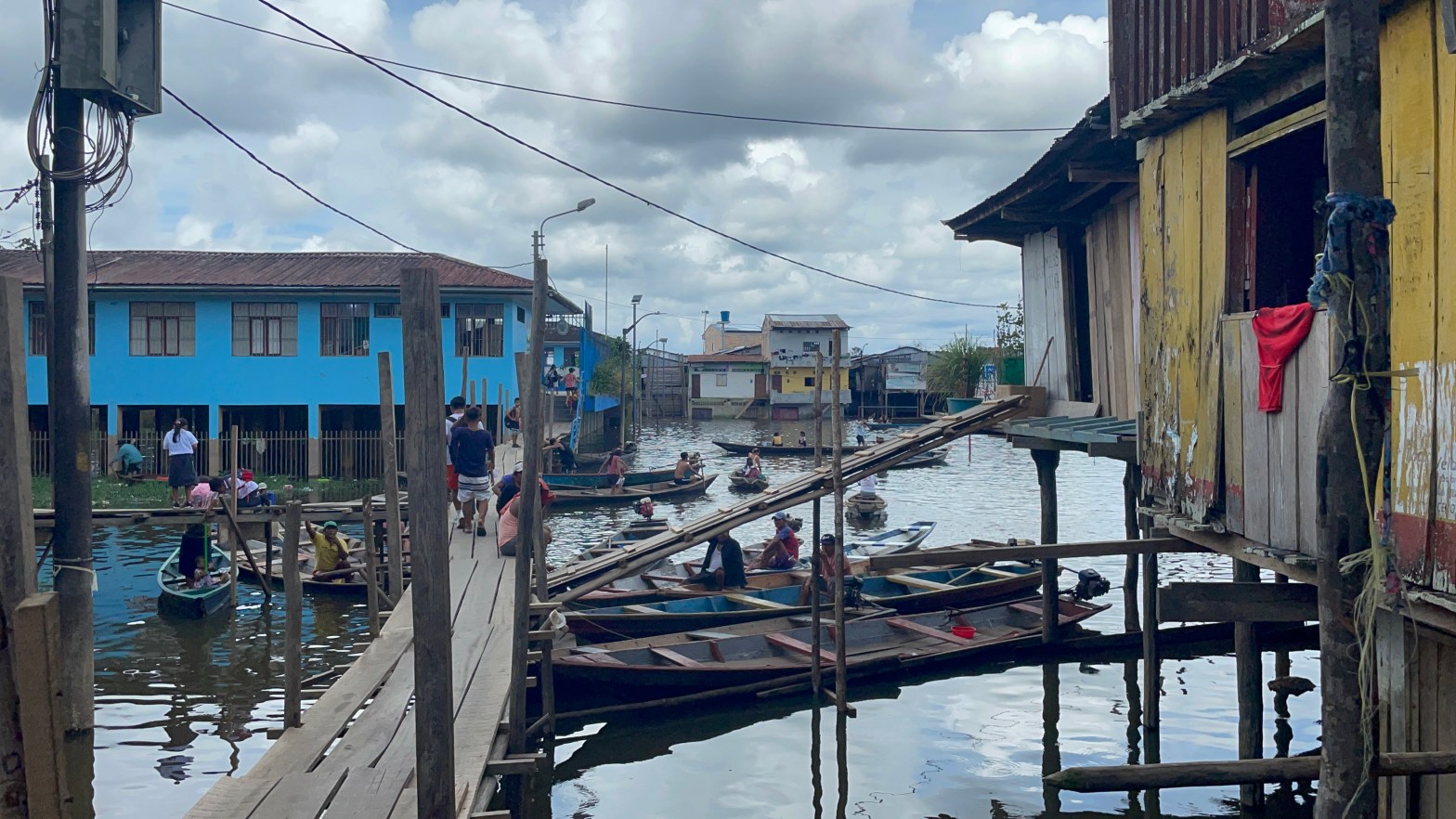
EL CAMINO
Yo camino, camino, hasta el final
Hay un final? O sequiré caminando, sin fin
Pero no me estoy quejando, quiero caminando
Porque puedo ver muchas calles, muchas caras
Porque puedo sentir muchas emociones
Esos que no puedo sentir si cierro los ojos, mis sentidos
Esos que no puedo sentir si me quedo dentro
En estos días, camino sobre las aguas
Sin miedos, solo un corazón para un mañana igual
THE WALK
I walk, walk, until the end
Is there an end? Or I will continue walking, without end
But I’m not complaining, I want to walk
Because I can see many streets, many faces
Because I can feel many emotions
Those that I cannot feel if I close my eyes, my senses
Those that I can’t feel if I stay inside
These days, I walk on waters
Without fear, just a heart for an equal tomorrow
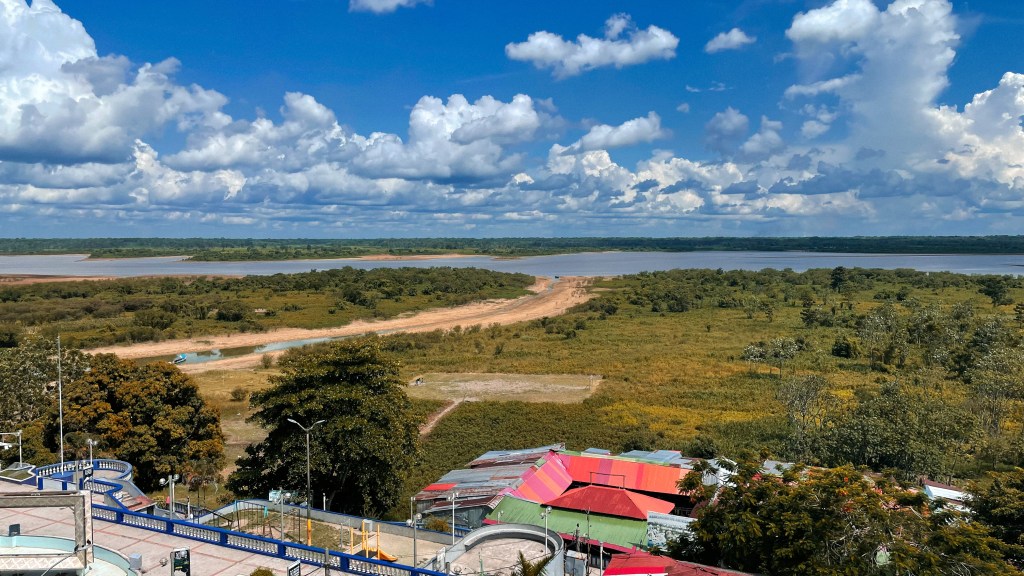
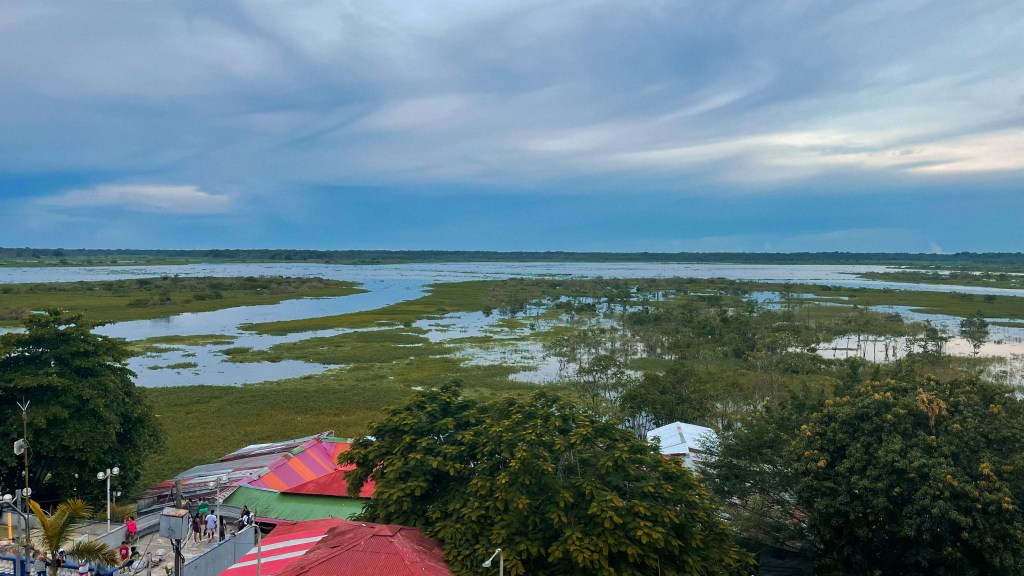
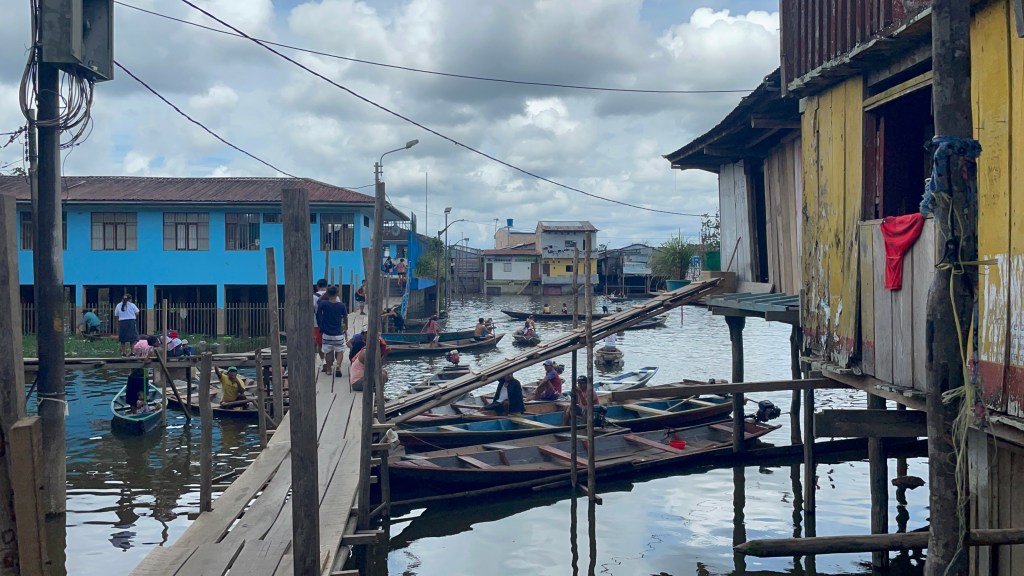
(Top-Bottom) 1) November 2022 – view of Itaya river during vaciante (dry season) taken from Plaza de Armas, Iquitos City, Perú; 2) April 2023 – view of Itaya river during creciente (wet season) taken from Plaza de Armas, Iquitos City, Perú; and 3) April 2023 – lower Belén, a community along Itaya river.
Where do I begin? I guess it is best to begin with introducing myself and the general idea of my PhD. I am a social scientist from Philippines with an interdisciplinary background, mostly along the disciplines of development studies, environmental science, and communication. In general, my PhD explores the themes of drought-to-flood adaptation, governance, and anticipation by using narratives and futures methods. And I explore these themes in my case study areas in several riverine communities in Iquitos, Perú. It is important to say that these riverine communities experience annual dry-wet cycles (vaciante-creciente), as normal fluctuations of the river. For this story, I will take you to some communities in Belén, where the communities experience the annual dry-wet cycles of Itaya River.
I was in Belén in November 2022 for a short scoping fieldwork, and I returned this April 2023 for a two-month fieldwork. The fieldwork schedules were also perfectly timed, because I was able to talk to people and the see the communities both in the dry and wet season. Having this experience and encounter with my case study can help me unpack the stories of the community members I spoke with.
I went to San Francisco and Sachachorro, Belén to do my storytelling sessions, and surveys. This is the heart of my PhD – the brief moments when I am able to put my guard down, set aside the academic pressure to theorize, and listen with the intent to listen. During our storytelling sessions, we talked about their daily lives including stories of daily activities how they access potable water, and social services (i.e., education, health, information). We also talked about their different sources of income (i.e., fishing, agriculture), and how their usual days can be affected by sudden or extreme drought or flood.
Their stories took off from this point, where they also started talking about specific drought and flood events. Their stories covered aspects of being surprised with sudden extreme flooding, and how they did not have memories of such events in the past. Hence, most of them were caught unprepared, and just had to deal with the flood as it happened.
We always ended the storytelling with an imagination session where we ask them what stories they might tell their children to in the next five or ten years. This ending did not always give hopeful stories of the future, but if we truly want to use science and our understanding as a means to help communities, it is inevitable and necessary to listen to stories of pain, loss, and injustice. It is only by then that our understanding can be challenged, and perhaps by then we can also start asking critical questions that challenge existing assumptions or biases.
At the end of my fieldwork, we had almost fourty storytelling sessions in these communities. Each story is different, because each storyteller experienced the “same” drought-to-flood differently.
I started my fieldwork by writing the poem El Camino (The Walk) as a reminder to myself that I have to do this PhD with all my senses open, unafraid, because the storytellers I met deserve a just future.
Author: Heidi Mendoza, PhD Candidate at the Institute of Environmental Studies (IVM) at Vrije Universiteit Amsterdam (VU-Amsterdam). Her other ethnographic poems about this fieldwork are accessible through her webiste: WEARENOTDATA
 PerfectSTORM